
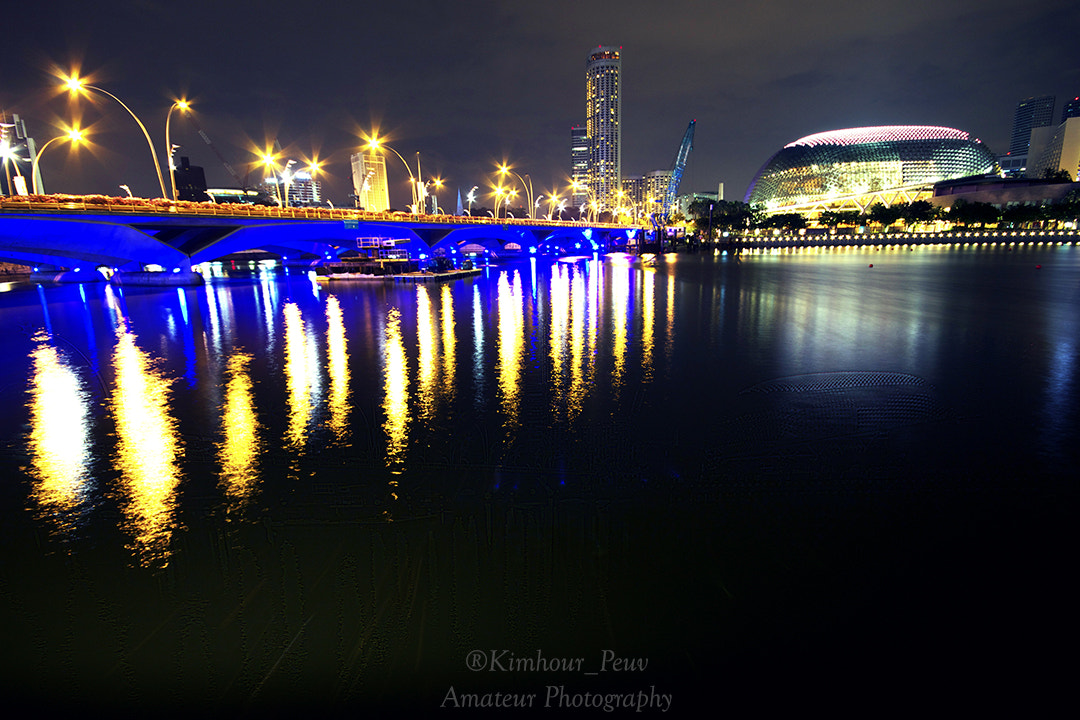
Photo: Kimhour Peuv / CC BY 3.0 via Wikimedia Commons
How you actually fly from Porbandar to Singapore — one stop via Ahmedabad or Mumbai, about 10–14h in total, after a 180 km road leg to Rajkot.
Start with the fact that shapes every other decision: Porbandar has no international airport. Your trip begins with roughly 180 km by road — about 3 hours — to Rajkot International in Rajkot, and from there Singapore is one stop via Ahmedabad or Mumbai, about 10–14h in total.
The routing
There is no nonstop from Rajkot to Singapore, so you connect — usually via Ahmedabad or Mumbai — for a total journey of about 10–14h.
Leave a real layover. Sixty minutes looks efficient when you are comparing fares and is the single most common reason people lose the first night of a short holiday. Two hours is the number we book to, and on a self-transfer itinerary where your bags are not checked through, three.
Timing your departure
Singapore is 2 hours 30 minutes ahead of India, which is small enough that jet lag is a non-issue. That makes a morning departure genuinely valuable — land early afternoon, clear Changi (one of the fastest arrivals airports anywhere), and you have most of a usable day.
Late-night arrivals cost you a hotel night for a few hours of sleep. If the fare difference is small, take the earlier flight.
Getting to Rajkot from Porbandar
The 180 km road leg is part of your journey, not a footnote. In clear conditions it is about 3 hours; in bad weather or on a festival weekend, considerably more. International check-in closes 60 minutes before departure and does not wait.
For any morning departure, travel to Rajkot the evening before and stay near the airport. For an afternoon flight, an early road transfer works. Driving through the night for a dawn departure is the one approach we actively talk people out of.
Baggage and Changi
Full-service carriers usually include 25–30 kg checked; low-cost fares often include none, and airport-purchased baggage is the most expensive way to buy it. Add it online when booking.
Changi genuinely is worth arriving early for on the way home — Jewel and its indoor waterfall are landside and free, so a long check-out gap is not the dead time it would be elsewhere.
Which airlines to expect
On Indian routes to Singapore the field splits three ways. Singapore Airlines is the premium option — best schedule, best baggage, priced accordingly. IndiGo and Air India cover the widest set of Indian airports and are usually the value pick on nonstop routes. Scoot is the low-cost arm of Singapore Airlines, which means a genuinely cheap fare with everything unbundled.
The Scoot trap is worth naming: the headline fare excludes checked baggage, seat selection and meals, and adding all three at booking often lands you within a few hundred rupees of a full-service fare that included them. Compare the final total, not the advertised one.
When to book
Six to eight weeks before departure is the reliable window on this route. Earlier than about three months and airlines have not released their cheaper buckets; inside three weeks you are paying the late-booking premium. Around Indian school holidays, Diwali and Christmas, push that to eight to ten weeks.
Tuesday and Wednesday departures are consistently cheaper than Friday and Sunday ones, and the gap is often large enough to be worth shifting a day for.
Arriving at Changi
Changi is genuinely the fastest major arrivals airport most travellers will use — automated immigration gates, bags that usually beat you to the belt, and clear signage throughout. Budget 30–45 minutes from wheels down to kerbside rather than the two hours you might plan for elsewhere.
Two things to do before you fly: submit the free SG Arrival Card online within three days of arrival — it is mandatory and separate from your visa — and have your return ticket and hotel booking accessible, because immigration officers do sometimes ask.
Our Singapore packages can include flights from Rajkot — send your dates and we will quote the routing with the fare.
Practical things worth knowing before you fly
Staying connected
Buy a tourist SIM at Changi on arrival — Singtel, StarHub and M1 all sell them in the arrivals hall from about SGD 12 for a week with generous data. An eSIM bought before you leave India works just as well and saves the queue. Free public wi-fi is widespread but requires a local number to register, which is the catch that sends most people to the SIM counter anyway.
Language
English is an official language and the working language of the whole country — every sign, menu, ticket machine and announcement is in English. Tamil is also an official language, and Little India operates largely in Tamil and Hindi. Communication is genuinely not a barrier for Indian travellers.
Laws that surprise visitors
Singapore enforces rules that are unusual by Indian standards, and enforcement is real rather than nominal:
- Chewing gum cannot be imported or sold. Bringing a packet in your bag is a genuine problem
- E-cigarettes and vapes are completely banned — possession alone carries heavy fines, and this catches out more Indian travellers than anything else on this list
- Smoking is prohibited in most public places; use the marked yellow-box zones
- Eating and drinking on the MRT is fined, including water
- Jaywalking is an offence — use the crossings
- Littering, including cigarette butts, carries substantial fines
Drug offences carry the death penalty, and this is not a formality. Do not carry anything for anyone.
What you can bring in
Duty-free allowance for travellers arriving from India is up to 1 litre each of spirits, wine and beer, and only if you have been outside Singapore for at least 48 hours. There is no duty-free cigarette allowance at all — every cigarette brought in is taxable, and undeclared cigarettes are the most common enforcement action at Changi. Declare or dispose of them before you clear customs.
Tipping, safety and emergencies
Tipping is not customary; restaurants add a 10% service charge and 9% GST, shown as "++" on menus, so the menu price is not the final price. Singapore is among the safest cities in the world, and using public transport alone at night is unremarkable rather than brave. Emergency numbers are 999 for police and 995 for ambulance and fire. Tap water is safe to drink everywhere.
If any of this changes what you were planning from Porbandar, tell us before booking rather than after — itinerary changes are free at the quote stage and chargeable once confirmed.
Comments are closed for this post.